You’re walking to the park when a neighbor comes around the corner with a dog on a leash. Before you even notice it, your child is behind your legs, gripping your hand, maybe crying or begging to go home.
If that sounds familiar, you’re not alone. Having a child afraid of dogs is something a lot of families deal with, and it can turn simple outings into stressful ones.
The good news is there’s a lot you can do. In this guide, you’ll learn why some kids develop a fear of dogs, what tends to make it worse, and how to help a child afraid of dogs feel safer and more confident, one small step at a time.
Why Are Some Children Afraid of Dogs?
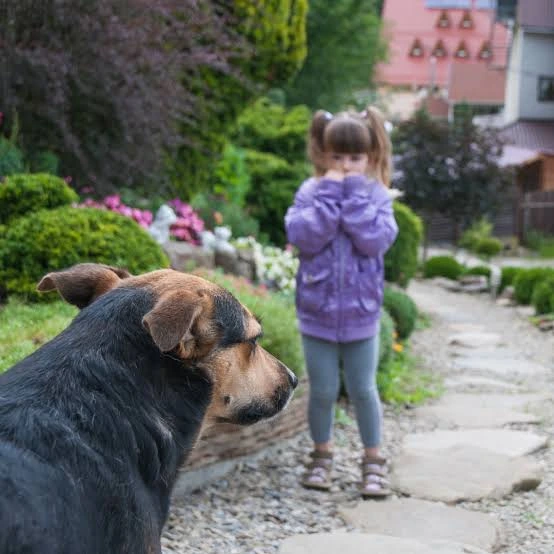
Before you figure out how to help a child afraid of dogs, it helps to understand where the fear comes from. There’s rarely one single reason. Fear of dogs in children often starts with something that felt big to the child, even if it seemed small to the adults around them.
Some common starting points:
- A scary moment, like being jumped on, barked at, or knocked over
- A frightening story, movie, or something a friend said
- Watching a parent, sibling, or another adult react with fear
- Simply not knowing much about dogs, so their movements and noises feel unpredictable
That last one matters more than people think. To a small child, a dog can be loud, fast, and right at eye level. Without understanding why a dog barks or jumps, it’s easy to assume the worst.
Some kids are also more cautious by nature. That’s not a flaw. It just means they may need a little more time and information before they feel safe.
What Is Cynophobia?
You may come across the word “cynophobia” while reading about this topic. It simply means an intense fear of dogs. Cynophobia in children usually describes a fear that’s strong enough to get in the way of daily life, not just some caution around a big, barking dog.
Plenty of kids are nervous around dogs without it being a phobia. Either way, the same gentle support tends to help. If your child’s fear is severe, or comes with panic, trouble sleeping, or a lot of worry about leaving the house, it’s worth talking with your pediatrician or a licensed mental health professional who works with children.
How Fear of Dogs Can Affect Your Child’s Everyday Life
Dogs are everywhere. They’re at parks, on sidewalks, at friends’ houses, and sometimes at school events. For a child scared of dogs, that can make a lot of normal places feel off-limits.
You might notice your child:
- Asking to skip playdates at homes with pets
- Avoiding the park or wanting to cross the street when a dog appears
- Getting upset long before a dog is even in sight
- Feeling embarrassed when other kids aren’t afraid
None of this means something is wrong with your child. It just shows how much energy the fear is taking up. Seeing that clearly can help you decide that now is a good time to work on it together.
What Parents Should Avoid
When we love our kids, we want the fear to go away fast. That’s completely understandable. But some common reactions can accidentally make dog fear in children stronger.
Try to avoid:
- Laughing at the fear or teasing, even gently
- Saying things like “Don’t be silly” or “There’s nothing to be scared of”
- Pushing your child to pet a dog before they’re ready
- Holding your child close to a dog “so they can see it’s fine”
- Getting frustrated or comparing them to siblings or friends
From your child’s point of view, these moments can feel like their feelings don’t count. They may also start to link dogs with stress and pressure, which is the opposite of what you want.
It’s also worth avoiding the other extreme, which is quietly ignoring the fear and hoping it fades. Some kids do grow out of it, but many need some support to get there.
How Parents Can Support Their Child
So what actually helps? When parents ask how to help a child afraid of dogs, the answer usually comes down to a few steady habits.
Listen First
Ask your child what feels scary. Is it the barking? The jumping? Not knowing what the dog will do? Let them talk without rushing to fix it. Something as simple as “That sounds really scary. Thanks for telling me” goes a long way.
Teach Simple Dog Safety
Kids feel calmer when they know what to do. A few basic safety rules give them a sense of control:
- Always ask the owner before going near a dog
- Never approach a dog that’s eating, sleeping, or tied up
- Stand still and stay calm if a dog comes close, instead of running or screaming
- Find a grown-up if you feel unsure
Help Them Understand Dog Behavior
A lot of fear comes from not knowing what a dog is “saying.” You can talk about how a loose, wiggly body or a play bow usually means a dog is relaxed or wants to play, and how a stiff body, growling, or hiding can mean a dog wants space. Picture books and videos make this easy to learn from a safe distance.
Practice Calming Skills
Give your child a few tools to use when they feel nervous. Slow belly breathing, counting to five, squeezing your hand, or saying a short phrase like “I am safe. I know what to do” can all help. Practice at home when things are calm, so these tools are easier to use when a dog shows up.
Stay Calm Yourself
Kids watch us closely, especially when they’re unsure. If you tense up, pull them away quickly, or sound worried every time a dog walks by, a child scared of dogs may take that as proof that dogs really are dangerous. Try to keep your voice relaxed and your body loose. Your calm gives them something steady to lean on.
Notice and Praise Effort
Praise the courage, not just the result. Watching a dog from across the street, asking a question about dogs, or staying calm a few seconds longer than last time are all real wins.
Why Gradual Progress Matters
Fear usually shrinks bit by bit, not all at once. That’s why small, gentle steps tend to work better than big leaps, and why pacing is such a big part of how to help a child afraid of dogs.
A gradual path might look something like this:
- Talking about dogs and looking at pictures together
- Watching videos of calm, friendly dogs
- Watching a dog from a comfortable distance, like across a park
- Being in the same open space as a calm, leashed dog while you stay close
- Moving a little closer, but only if your child wants to
Every child moves at their own pace. Some steps take one try, and others take weeks. Going back a step is okay too. What matters is that your child feels in charge of moving forward and is never forced to approach, touch, or interact with a dog.
It also helps to keep the real goal in mind. You’re not trying to turn your child into a dog lover. You’re helping them feel safer, calmer, and more confident around dogs, so the fear doesn’t get to decide where they go or what they do.
About the OFOD Approach
If you’d like a more structured plan, the Overcoming Fear of Dogs Protocol (OFOD) is worth exploring. It was developed by Stefani Cohen, LCSW, a licensed psychotherapist, parenting coach, and mother.
The approach grew out of her professional experience and from helping her own daughter, Becky, through a fear of dogs. It focuses on the same themes covered here: learning about dogs, staying safe, building coping skills, growing confidence, and moving at the child’s own pace.
A Step-by-Step Road Map for Parents
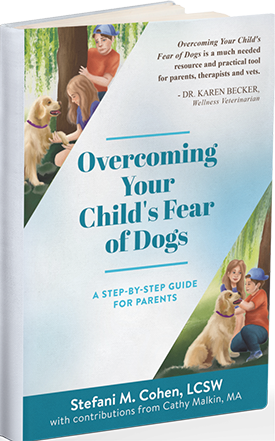
Stefani Cohen’s book, Overcoming Your Child’s Fear of Dogs, is written for parents, not kids. It’s a clear, compassionate road map for families wondering how to help a child overcome fear of dogs without pressure or force.
The book gives you a structured way to understand your child’s fear and support them through small, steady progress. It’s not about pushing your child toward a dog. It’s about helping them build the knowledge, safety skills, coping tools, and confidence they need to feel more comfortable over time.
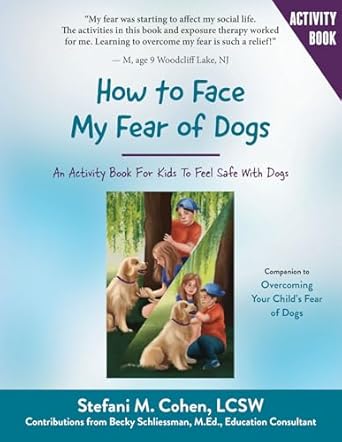
For kids who like hands-on learning, there’s also a companion activity book, How to Face My Fear of Dogs, that turns the same approach into games, drawings, and activities.
Frequently Asked Questions
Will my child just grow out of it?
Some kids do become less fearful with time. Many do better with gentle support, though, especially if the fear is keeping them from places or activities they enjoy.
Should we get a dog to help our child get over the fear?
It’s usually not a good first step. Bringing a dog home before your child is ready can feel overwhelming. Small, gradual steps outside the home are a better place to start.
What should my child do if a dog runs toward them?
Teach them to stand still, keep their arms close to their body, look away from the dog, and stay calm until an adult helps. Running or screaming can make some dogs more excited.
How long does it take for the fear to get better?
There’s no set timeline. Every child is different, and progress depends on things like how strong the fear is and how often they practice small steps. Focus on progress, not speed.
When should we get professional help?
If the fear is intense, getting worse, or affecting sleep, school, or daily life, talk with your pediatrician or a licensed child therapist. They can help you find the right kind of support.
You Don’t Have to Figure This Out Alone
Watching your child struggle with fear is hard. But with patience, understanding, and small steps, many kids become calmer and more confident around dogs.
Learning how to help a child afraid of dogs really comes down to a few simple things. Listen to your child. Teach a few safety rules. Practice calming skills together. And let your child set the pace.
If your child is struggling with a fear of dogs, explore Overcoming Your Child’s Fear of Dogs to learn more about a supportive, step-by-step approach. You can also see what other readers have to say on the Reviews page.