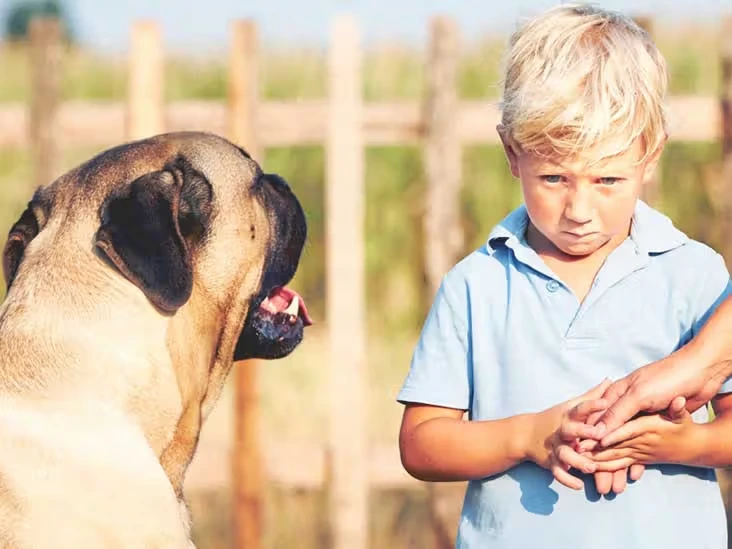
To an adult, a dog trotting by on a leash is just part of the scenery. To a child who’s scared, it can feel like the whole sidewalk just got smaller. Their heart races, their body tenses, and they may not have the words to explain what’s going on inside.
That’s one reason talking about fear can be tricky with young kids. Asking “Why are you scared?” often gets a shrug or tears. But hand them a crayon, a game, or a simple activity, and suddenly the conversation gets a lot easier.
In this article, we’ll look at why some kids are afraid of dogs, why understanding feelings matters, and how an activity book for kids afraid of dogs can turn a big, confusing fear into small, manageable steps.
Why Children May Be Afraid of Dogs
Fear of dogs can start in different ways. A child might have been jumped on or barked at. They might have heard a scary story, or seen someone they trust react with fear. Sometimes there’s no single event at all. The child just doesn’t understand dogs, and the unknown feels threatening.
Dogs can also seem unpredictable to little ones. They move quickly, make loud sounds, and are often right at a child’s eye level. For a child scared of dogs, that combination can be a lot to handle.
Whatever the cause, the fear is real to your child. It’s not a sign that they’re weak or being difficult. It’s something they can learn to work through with the right support.
Why Understanding Feelings Is Important
Before kids can manage a fear, it helps to understand it. Many young children feel “bad” or “scared” without being able to say much more than that.
Learning to name feelings gives them a starting point. When a child can say “I feel nervous when a dog barks” or “My tummy feels tight when I see a big dog,” a few good things happen:
- They feel less alone, because someone understands what they mean
- Parents can see exactly which part is hard for them
- The fear starts to feel like something they can work on, not something that controls them
Kids can also learn that feelings come and go. Fear might feel huge at first, but it can get smaller, especially when they have tools to help.
That’s why a good activity book for kids afraid of dogs often starts with feelings before it gets to dogs at all.
How Activities Can Help
Kids learn through play. It’s how they make sense of the world. So it makes sense that fear of dogs activities for kids can work better than a long, serious talk.
Here’s how different kinds of activities can help:
- Drawing: Kids can draw what scares them, what a “brave” version of themselves looks like, or a dog that seems friendly. Putting the fear on paper can make it feel smaller and easier to talk about.
- Games: Simple games make learning feel fun instead of heavy. Matching dog body language to feelings, for example, teaches a real skill without any pressure.
- Reflection: Short prompts like “What helped me feel calm today?” help kids notice their own progress.
- Simple exercises: Breathing practice or a few “brave words” give kids something to do with their bodies and minds when they feel nervous.
Activities also give parents a natural way to join in. Sitting side by side with a workbook can feel much less intense than a face-to-face conversation about something scary.
If you’re choosing an activity book for kids afraid of dogs, look for one that feels warm, simple, and encouraging, with plenty of room for your child to share their own thoughts and ideas.
Learning About Dogs and Safety
A big part of helping kids overcome fear of dogs is replacing scary unknowns with real knowledge. Kids can learn things like:
- How dogs communicate: a loose, wiggly body and soft eyes often mean a dog is relaxed, while a stiff body, growling, or showing teeth means a dog wants space
- How to act safely around dogs: always ask the owner first, never bother a dog that’s eating or sleeping, and stand still and calm if a dog comes close
- When to ask for help: if they feel unsure or scared, they can go to a trusted adult right away
Pretend play is a great way to practice. A stuffed dog makes a perfect stand-in, and your child can take turns being the owner, the dog, and the kid who asks, “Can I say hi?” It’s low-stakes, a little silly, and surprisingly effective.
This kind of learning is empowering. Instead of feeling helpless, kids start to feel like they know what to do. And knowing what to do is often the first step toward feeling braver.
Building Confidence One Small Step at a Time
Confidence grows from small wins. A child doesn’t need to pet a dog to make real progress. Progress might look like:
- Looking at a picture of a dog without getting upset
- Watching a dog video all the way through
- Staying calm while a dog walks by across the street
- Asking a question about how dogs behave
Each of these is worth celebrating. A sticker, a high five, or simply saying “I saw how brave you were today” helps kids notice their own courage.
It’s important to let your child lead. Pushing them to get close to a dog before they’re ready can undo the trust you’ve worked hard to build. The goal isn’t to make your child love dogs. It’s to help them feel safer and more confident, so fear doesn’t keep them from the things they enjoy.
Some kids move quickly, and others need more time. Both are completely okay.
Tips for Making Activity Time Work at Home
A few simple habits can make activity time feel easy and positive for kids afraid of dogs:
- Keep sessions short. Ten or fifteen minutes is plenty for most kids. It’s better to stop while they’re still enjoying it.
- Pick a calm time. Right after a scary moment with a dog usually isn’t the best time. A quiet afternoon or a relaxed evening works better.
- Follow their interest. If your child loves one activity, it’s fine to do it again. Repeating something that feels good builds confidence.
- Skip the grades. There’s no right or wrong drawing. What matters is that your child is thinking and sharing.
- Connect it to real life. If your child learns about wagging tails in an activity, you might point one out from a distance on your next walk, only if they seem comfortable.
Most of all, keep it light. When activity time feels like a treat instead of a chore, kids are more likely to open up, and that openness is a big part of helping kids overcome fear of dogs over time.
About How to Face My Fear of Dogs
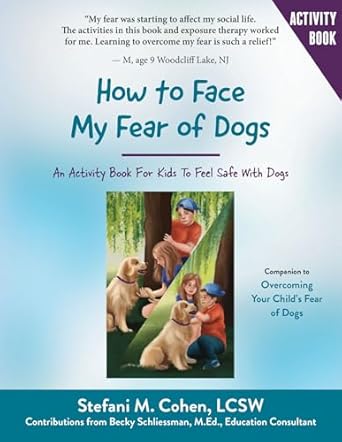
If you’re looking for a dog fear workbook for children, How to Face My Fear of Dogs was made with exactly this kind of learning in mind. It’s a hands-on companion book that turns the Overcoming Fear of Dogs Protocol (OFOD) into games, drawings, and small wins kids can feel proud of.
The OFOD approach was developed by Stefani Cohen, LCSW, a licensed psychotherapist, parenting coach, and mother. It grew from her professional work and from helping her own daughter through a fear of dogs.
Inside the book, kids can explore their feelings, learn about dogs and how they behave, practice coping skills, and build confidence in small steps. The language and activities are meant to feel friendly and supportive, so it feels less like homework and more like something you do together.
Like any activity book for kids afraid of dogs, it isn’t a magic fix, and it’s not meant to push children toward dogs before they’re ready. It’s a gentle tool to support learning, conversations, and confidence.
How It Works With the Parent Guide
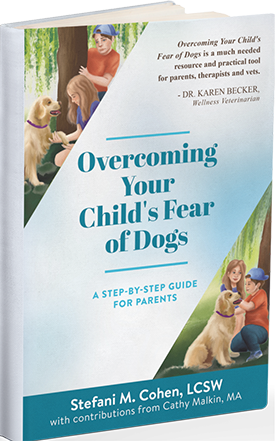
How to Face My Fear of Dogs is designed as a companion to the parent guide, Overcoming Your Child’s Fear of Dogs. The two books follow the same overall approach from different sides:
- The parent guide gives you a road map, so you understand the process and know how to support your child along the way
- The activity book gives your child their own hands-on way to learn, practice, and celebrate progress
Used together, you and your child are working toward the same goals. You’ll have the background to guide the process, and your child will have child-friendly dog fear activities made just for them.
Frequently Asked Questions
Do I need to sit with my child while they do the activities?
It usually helps, especially for younger kids. Doing activities together gives you a chance to talk, cheer them on, and notice what feels hard. Older children may want to do some parts on their own and share afterward.
Can activities replace real-life practice with dogs?
Activities build understanding, coping skills, and confidence. Many families find they make later real-life steps, like watching a dog from a distance, feel more manageable. Those steps should still happen at the child’s pace.
What if my child doesn’t want to talk about dogs at all?
That’s okay. You can start with feelings in general, or with activities that feel fun and low-pressure. Let your child warm up before moving to dog-related activities.
How do I know if my child is making progress?
Look for small changes, like staying calm a little longer, asking questions about dogs, or being willing to go places they avoided before. Progress is rarely a straight line, and that’s normal.
When should I look for professional help?
If your child’s fear is intense, getting worse, or affecting sleep, school, or friendships, talk with your pediatrician or a licensed child therapist.
Small Steps, Big Courage
Fear of dogs can feel big to a child, but it doesn’t have to stay that way. With patience, a little knowledge, and activities that make learning feel fun, kids can grow more confident one small step at a time.
An activity book for kids afraid of dogs is one simple way to start those conversations and make progress feel doable, for your child and for you.
If you are looking for a child-friendly way to help your child understand and work through their fear of dogs, explore How to Face My Fear of Dogs.